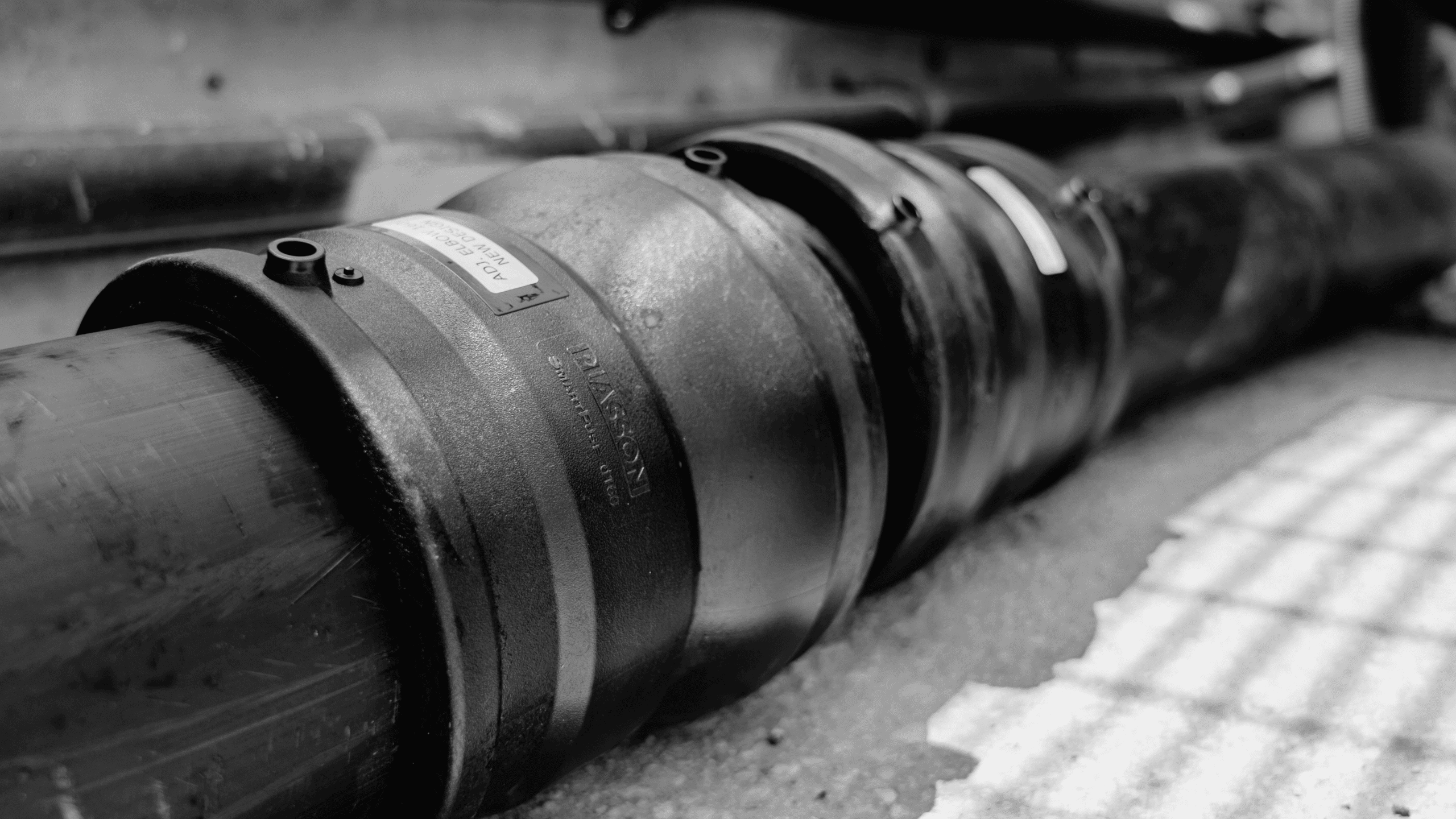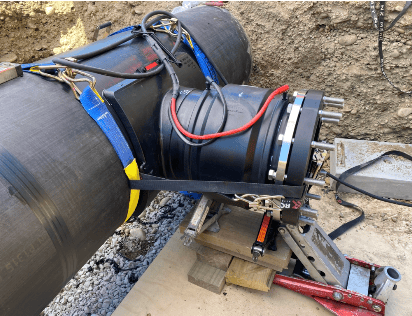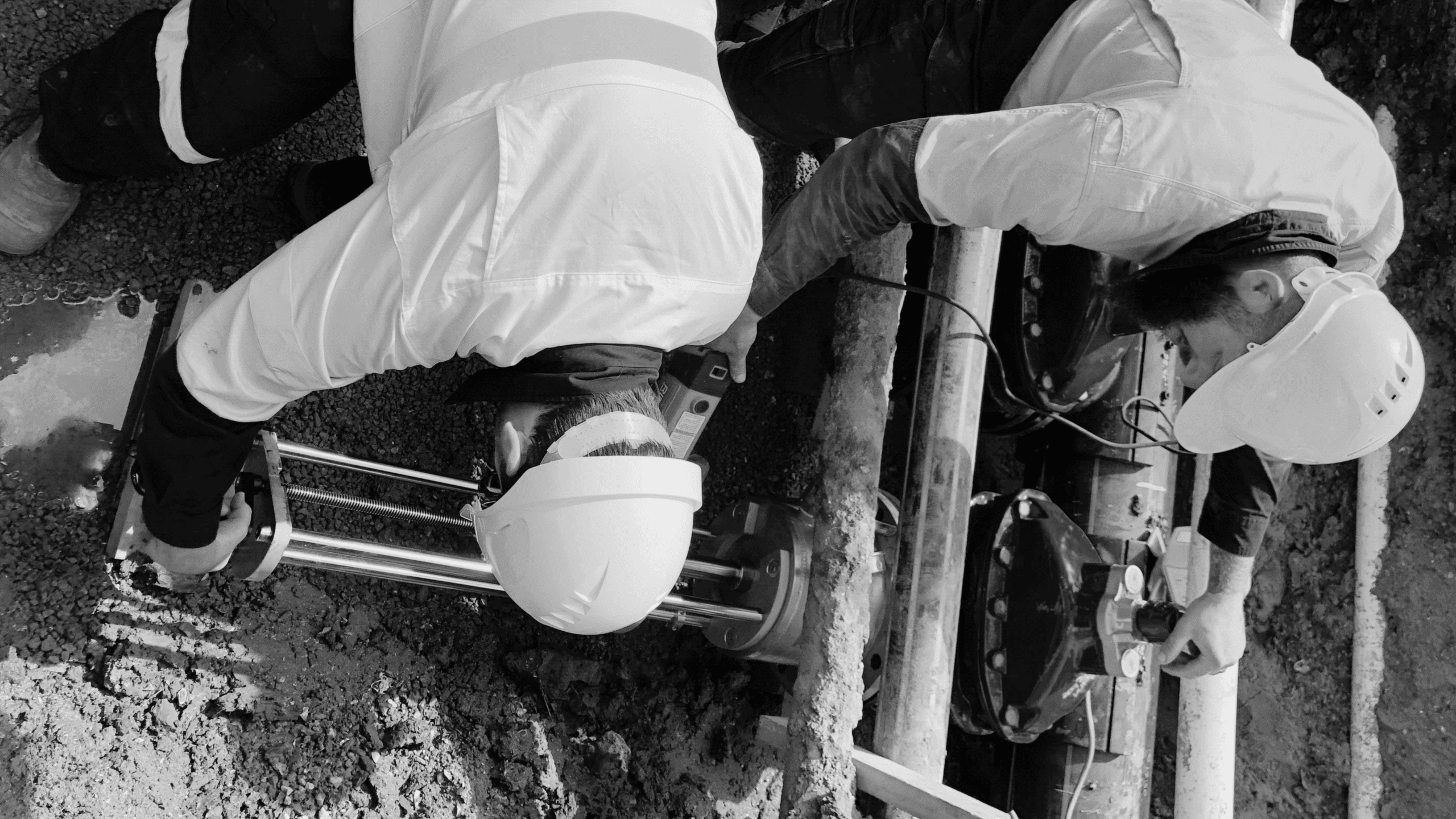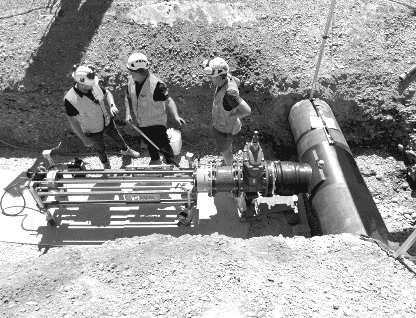
So what’s the difference? Electrofusion uses fittings to connect lengths of PE pipe together while Butt Welding joins the face of pipe ends directly to each other.
Electrofusion is better for tight spaces or where pipes need to connect at certain angles, while butt welding is often preferred for its strength and simplicity in open areas. Both are common for joining HDPE pipes, with the best choice depending on project requirements like location, pipe size, and access.
An electrofusion fitting with embedded heating coils is placed around the pipe ends. An electric current is passed through the coils, heating and melting the pipe and fitting surfaces to create a fused joint.
Best for: Tight spaces, overhead work, and situations where butt welding equipment is not practical.
More flexible and accommodates different angles.
Can join pipes of different wall thicknesses.
Shorter installation time in certain scenarios.
Requires less space for equipment.
Requires specialized fittings and extra tools.
Joint strength is dependent on the quality of the fitting and adherence to proper procedures.
Not suitable for trenchless installation methods.
The ends of two pipes are trimmed and then pressed against a heated plate until they melt. The plate is removed, and the pipe ends are fused together, forming a strong, homogenous joint.
Best for: Open areas and large projects where space is not a constraint.
Creates a joint with strength equal to the pipe itself.
No extra fitting is required, which can be more economical for large projects.
Simpler process in terms of required components, as the welder often has all necessary items.
Suitable for trenchless installations like directional drilling.
Requires more open space to operate.
Requires a precise, straight alignment of the pipe ends.
Not ideal for joining pipes with different wall thicknesses.
Consider your location: Use butt welding in open areas and electrofusion in tight or difficult-to-access spaces.
Evaluate your project needs: If a high degree of flexibility is needed, electrofusion is a better choice. If maximum strength with fewer components is the priority, butt welding is ideal.
Assess the pipe specifications: Butt welding is best for pipes with the same wall thickness, while electrofusion can accommodate differences.
Factor in labour and skill: Butt welding is generally considered easier and faster for open areas. Electrofusion delivers for more reliable sophisticated pipelines when trained operators following best practice.